
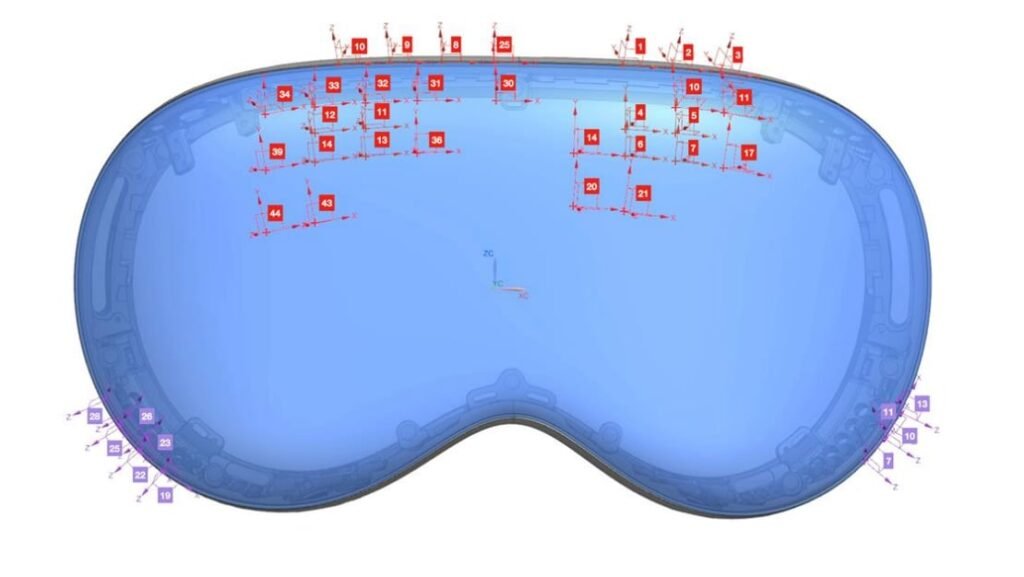
Apple’s ambitious foray into spatial computing — the Vision Pro — is officially moving into its next phase. Thanks to newly published FCC documents, we now have confirmation of an updated Vision Pro model (A3416) and a glimpse at Apple’s roadmap for its head-mounted devices. While the changes may seem minor on the surface, they speak volumes about Apple’s broader plans for immersive technology.
⸻
What the FCC Just Revealed
The FCC filings include a series of technical documents — transmission tests, SAR test reports, and WLAN test reports — that confirm a new Vision Pro model is in the pipeline. Listed under model number A3416, the images clearly depict the current Vision Pro design, but with one internal shift: a likely move from the M2 chip to a faster, next-gen M5 processor.
Key points from the FCC docs:
• No sign of Wi-Fi 6E (6GHz band), so it’s likely sticking with Wi-Fi 6
• Same exterior hardware and sensor layout
• Still priced at $3,499
• Expected to launch before the end of 2025
⸻
Why This Update Matters
Even though the design remains the same, the performance jump with an M5 chip could be significant. Vision Pro’s promise hinges on real-time responsiveness and immersive visuals — and Apple knows that lag or frame drops ruin the experience. A chip upgrade signals Apple’s commitment to improving the product iteratively while working on more transformative releases down the line.
⸻
What About the “Vision Air” and Apple Glass?
According to multiple reports, Apple is working on a lighter, more affordable headset codenamed Vision Air, slated for release in 2027. Simultaneously, development has accelerated on Apple Glass, with the first model (without a display) expected in 2027, and a full AR version in 2028.
Here’s how the product roadmap is shaping up:
• 2025: Updated Vision Pro with M5 chip
• 2027: Apple Glass (AI + camera, no display)
• 2027: Vision Air (lighter, possibly cheaper headset)
• 2028: AR Apple Glass with full display
⸻
Takeaway
While the Vision Pro refresh may feel incremental, it represents a foundational step in Apple’s broader wearable strategy. They’re not aiming to dominate the VR space overnight — they’re methodically building the future of computing, one chip and one device at a time.
The shift from bulky headsets to lightweight smart glasses isn’t just about comfort. It’s about blending computing into everyday life, making the digital world feel less like a destination and more like a layer over the real one.