
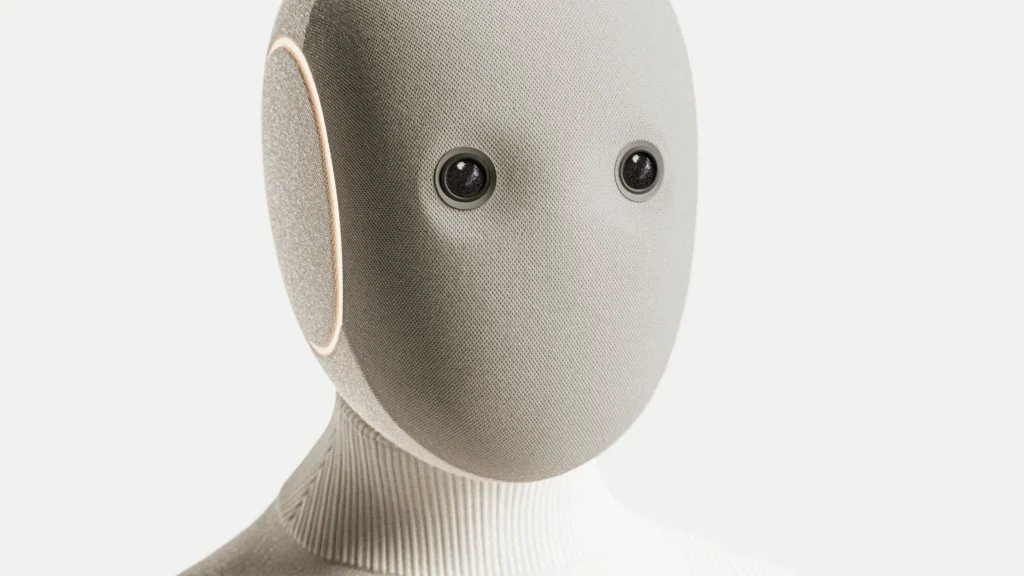
A new household robot called NEO has dominated timelines with a dream pitch: a 5’6″, 66-pound humanoid on two legs that folds laundry, does the dishes, waters plants, vacuums, finds the TV remote, and docks itself to recharge. Orders are open now with two pricing paths, either a monthly subscription near $500 or an outright purchase near $20,000 with a small refundable deposit to hold your place. On paper, the value story is obvious. If a machine can reliably clear hours of chores every week, early adopters who value time over money will pay.
The problem is the gap between what is promised today and what is actually shipping soon. Viewers reasonably assume a level of built-in intelligence: object recognition, navigation, house mapping, and useful task execution while you are away. In practice, much of what has been shown publicly relies on teleoperation. A skilled human in another room or another city can guide the robot in real time through a headset and controllers. If you have never heard that term, start here for context: Teleoperation. You can also see broader background on the category here: Humanoid robot. The company behind NEO, 1X, has demonstrated impressive hardware and selective autonomous moments, but many headline tasks in polished videos are performed by remote operators.
Independent reporting has highlighted this mismatch. Journalist Joanna Stern has covered hands-on demos and pressed executives on what is autonomous versus teleoperated. Her work is a good reality check on where things stand today: Joanna Stern at The Wall Street Journal. The takeaway is not that the product is a scam. It is that autonomy is early, teleoperation fills the gaps, and the road from a cool demo to dependable daily chores is long.
Why companies do this is understandable. To reach the fully autonomous version people want, they need vast amounts of training data. Every home is different. Robotic grasping varies by object, material, and orientation. A general assistant must learn rooms, tools, routines, safety constraints, and user preferences. That is similar to how Tesla’s Full Self-Driving collects experience at scale. Early adopters use the system under supervision so models can improve. With home robots, the “beta” happens inside your house, which adds privacy and safety questions that are meaningfully different from a car operating on public roads.
This is where the preorder model gets risky. You pay now for a promise that depends on you becoming a data source. Some vendors even advertise an “expert mode,” where a remote specialist can take control when the robot cannot perform a task, with assurances about face blurring or geofenced rooms. That may be acceptable for some buyers, but it is a serious tradeoff. If the robot will be around medications, fragile items, pets, or children, failure modes matter. A dropped glass, a wrong pill, or a simple fall can create real harm even at low speeds.
There are product design questions, too. Must the helper be human-shaped for most chores, or would task-specific tools be safer and cheaper. A biped with ten fingers is flexible, but complexity raises cost and increases the chance that a system needs teleoperation. The ideal assistant disappears into your life. Today’s humanoids are still attention magnets that require setup, supervision, and service.
If you are considering an early unit, use a disciplined framework:
- Clarify autonomy today vs teleoperation. Ask for a written list of tasks that run without human operators, and how success is measured.
- Demand a privacy model you can enforce. Where is data stored. Who can access it. How is video handled. Can you audit logs and revoke access in real time.
- Define failure boundaries. What happens if the robot drops a dish, misidentifies medication, or cannot stand up. Who pays for damage.
- Pilot narrow, high-value jobs first. Think door opening, item fetching, or scheduled room checks. Avoid complex manipulation until reliability is proven.
- Insist on service level terms. Response times for teleoperation requests, uptime targets, replacement policies, and on-site support windows should be explicit.
- Compare against non-humanoid options. A mix of smart locks, robot vacuums, and task bots might deliver 80 percent of the value with fewer risks.
- Study recent cautionary tales. Ambitious AI products like the Humane AI Pin and the Rabbit r1 launched with huge promises and needed months of iteration to meet basic expectations. Do not pay for a dream without a plan to bridge the gap.
For many households, the people who would benefit most from the “finished” version of this device, like the elderly or those with mobility limitations, are the least likely to be comfortable as beta testers. That does not mean humanoid helpers are a dead end. It means builders must close the capability gap with honesty, robust safety design, and clear customer protections. If they do, this category can evolve from a viral demo to a dependable assistant.
If you want help evaluating this space, drafting guardrails, or integrating safer, lower-risk automation into your workflows, our team can assist. For process mapping, governance, and rollout planning, see Business IT Consulting. For connecting assistants to approved data and tools with strong controls, see AI Integration and Automation. For change management and user education, see AI Training for Teams. If your launch or pilot needs video explainers or demos, explore Podcast and Video Production. When you are ready to design a safe proof of concept, contact us at JT4 Technologies.